
Australian Health
System: Views after
8 months working at just one polyclinic.
The difference with the UK is sun and SPACE and
cheaper land. Australia has a small population of just 21
million:
most of the inhabitants are on the eastern side of the continent, and
then
within 100km of the coast. But even that
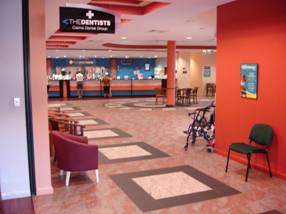
is a vast area. Cairns itself is 130 years old, but has only really developed in the last 30 years; the area has about 150,000 people. There is only one road linking it to Brisbane and the South. This road gets flooded every wet season, cutting Cairns off for days. The space makes Australia appear to look like America, but to me it is neater and more modern than the latter. This available space means that the Polyclinic model is possible, since it occupies the area of a decent supermarket, with ample free car parking; each space is large enough for a 3 ton truck. This is a six doctor practice. In the 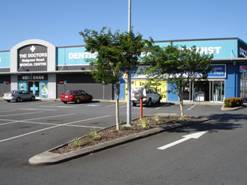 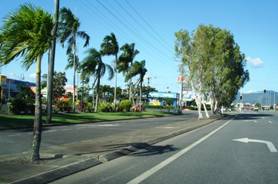
The Polyclinic The road leading to the centre facing Cairns  Some of the
car parking
Some of the
car parkingThe health service is different. The people seem to appreciate it. To them, that is better than the NHS, since they can usually get what they [the patients] want when they want it. They would not want an entirely socialised and, to them, a restrictive service. The private sector is fully integrated. Private insurance also tops up Medicare payments for hospital care. Insuring for primary care is forbidden by law, to prevent increase in fees. It is understood that patients have to pay for services. If you are under 16 then the Medicare programme supplies the bulk of care and primary care is free. Drug costs are subsided for all, but within a limited list. The concept of top-up is understood, and even appreciated. Microgynon is available on the Pharmaceutical Benefits Scheme (PBS), but many patients are happy to pay for Yasmin. This is liberating for both the GP and patient. You can go off formulary if the patient is happy to pay, and they usually are. There is a limit to the cost patients have to carry for chronic dieseaes. After reaching a limit the cost of drugs become free for the rest of the year. The Medicare system is new. It was created in 1984.  https://www.humanservices.gov.au/
There is no patient list for GPs. Patients can ring any practice for an appointment, and they do just that. In this practice, at least third of the patients I see have come in because they could not get an appointment at their local practice at their convenience. This is like a UK walk in centre, Urgent care Centre or Darzi Clinic. Here patients will come in for a second opinion on the same day....and not tell you that is what they are doing. The disadvantage of this is that chronic disease management is terrible. The average life expectancy of an aboriginal male is still 57. Diabetes is rife. I have had a patient tell me he gets his BP medication from one practice, his diabetic drugs from another, and gets blood tests here this third practice, and he has run out of one of his medications so is seeing me. I have no record of his care. Retinal eye photography is not done. There were no tuning forks in the building. There is a CT scanner of course, where I can order a pulmonary flow CT scan, there and then, for a suspected PE. The Government and some GPs are aware of this deficiency, and there is a move to pay doctors for an enrolment system (aka GP List). This had been resisted by the profession who prefer the fee for service approach, and patient groups do not like not being able to go where they please. Recent polls suggest a majority of GPs now support the idea. GP are not involved in repeat prescriptions. You get one month’s supply and up to 5 repeats from the pharmacy. Even antibiotics default to one repeat by the clinical computer. The clinical IT system at the clinic is terrible compared to UK systems. Some older GPs in towns have had in effect a list of patients. Cairns, with its high turnover, and my high turnover practice (worse as a new GP in the area), has given me a dimmer view of chronic disease management which may not be fair. Out of town centres is in effect a list system, as there are no other GPs around. Because patients can move about, some drugs on the Pharmaceutical Benefit Scheme (https://www.pbs.gov.au/html/home) require you to make a phone call to get permission to prescribe. A code is given to go onto the script. This registers the use of the dug on a central database. This makes sense for expensive or abused drugs, as it prevents patient shopping around and building up supplies, as they are recorded centrally. Changing the amount of medication on a script can take the medication off PBS, and a phone call is needed to approve indication or such a change. Some very odd things are missing from the benefits scheme: dressings for leg ulcers, Thiamine for alcohol. Odd drugs, even quite cheap ones, need permission for no reason. Gabapentin for pain control can only be a private prescription. Antihistamines are not on the PBS at all. This small population dispersed over a wide area cannot easily support a generic drug market. Simvastatin is quite expensive compared to the UK. There is no pressure to use the cheaper dugs, as often they are not that much cheaper as the generic supply is weak and relatively expensive. GPs do not have an indicative drug budget, as no “list” of patients. The pharmacist can switch brands and use generics, unless a box is ticked on the script forbidding it. So the necessity for GPs to use generic names is reduced. Patients and GPs only know drugs by the brand names – which I really struggle with. The clinical computer system’s drug database is electronic Mims! It attempts to force non-generic use. Putting in Naproxen, forces you to search through every brand of Naproxen (some are allowed on the PBS, others are not): having chosen the PBS one, you can then force the system to print it out generically, which is what you typed up in the first place. Finding Thiamine 100mg is impossible: the system lists every brand and every vitamin pill and OTC medicine containing any quantity of thiamine. In fact, what I want is called Betamin. So I have to put in Betamin 100mg and then I can force the computer to print a prescription for Thiamine 100mg.  The
onsite pharmacy
The
onsite pharmacy 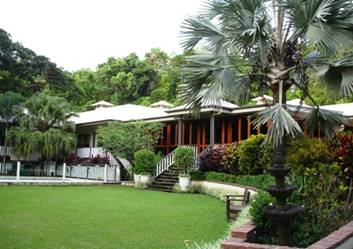 A Cairns consultant’s house, converted to use a as a conference and wedding reception centre, and drug company sponsored meetings. All clinical meetings seem to be drug company sponsored with “advertorials”. Above was the place of first drug company sponsored dinner. The last time I had anything like that, an entirely drug company sponsored event was back in 1995. I think we have gone too far in restricting drug company access to such marketing tools in the There are good effects of the Australian medical system. A doctor is upset if he does not have a busy day as that means less income. Other doctors in the building will not object to you taking an afternoon off, as that simply increases their income. Doctors want to want to see patients. I suspect that this may have an effect of doing what pleases, so it seems that more antibiotics are given to children than is reasonable: I found that all otitis media is always treated with antibiotics, with a repeat prescription offered. It is not in your interest to spend a long time with a patient with an URTI explaining its correct management, in order to encourage them not to darken your door again with such a complaint again. It could be a waste of time doing full health screen on every new patient. You may never see them again. The clinical system used here does not prompt for missing BP, smoking habits and so on. Coding is terrible and not really done. Family history is free text, for example. The payment and Medicare system means that I can do more for patients. An 8-year old child comes in, having fallen over at school. An X-ray performed in the clinic shows a green stick radial fracture, so I can put on a U slab. That is a fee for the consultation and X-ray and another fee for the plaster (I cannot prescribe a Futura splint, and none were available anyway). Every day there is a BCC, or SCC to remove. There are no qualms here about GPs removing all skin cancers. They have to: there is nobody else to do it. A full melanoma screening / micro-photography service is in place at the centre. 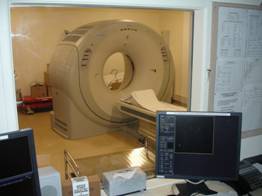
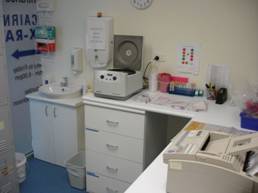
Some of the Kit at the clinic Phlebotomy spins down samples Courier service every 2 hours 8am-6pm A patient comes in with a Colles’ fracture, only aged 38. So I organise a bone density scan, and bloods, and expect to see her in a month. Three patients later she is sitting there with an envelope. The scan is completed and blood results popping up on the computer. The patient is sorted within hours. 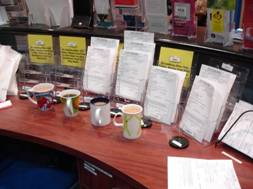
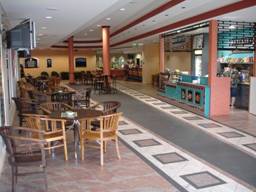
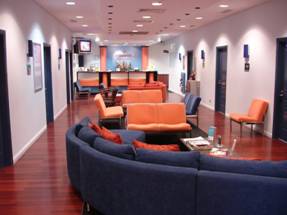
Otherwise it is primary care as per the UK. The vaccinations schedule is wider, including Hepatitis B at birth, and herpes zoster and RSV . Gardasil is being administered to the under 20s. The vaccinations are held centrally on a national recall / recording system. Patients can log in to print out when and what vaccinations they have had. There is still a full screening / child development checks system at regular intervals to 5 years old, which has to be performed by doctors. 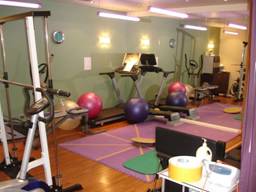
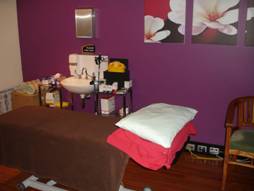
Physiotherapy and gym in the surgery Acupuncture: Claimable on Medicare. It will take me a little longer to appreciate the benefits of the system. Some of my views are prejudiced by what is familiar and I need to be open minded. The one thing is certain. Every country’s system is not perfect. Australia’s may be much better than most, and may be more able to control costs than the NHS. The polyclinic, acute medical/walk-in model does not seem good for chronic disease management. Gerry Bulger For insights for doctors in local practice, I have another password protected blog here at http://www.gerardbulger.com.au/doctors To get a password email me here https://bulger.co.uk/message.htm Back to start page Spetember 2009 The UK site remains at www.careprovider.co.uk Dr Gerard Bulger BSc MBBS DCH FRACGP FRCGP |
|
| [HOME] [MAIN INDEX] [ABOUT US ] [ENQUIRE] [CONTACT INFO] | |
|
of the Health On the Net Foundation These web pages are not sponsored by anyone other than the owner Dr G Bulger last update 22/5/2009 |
